This touches around the subjects of language Call and etymology, semantics as well as the expressiveness of a number of exclusively colloquial phenomena. An evaluation is carried out to determine the extent to which we can trace parallels to universally used ways of linguistic creativeness.
In this poster presentation at 57th Yearly Conference on the Societas Linguistica Europaea in Helsinki, in the perspective of comparative-historic Slavic linguistics and areal-typological Balkan linguistics, improvements inside the territorial dialects of the Orthodox Serbian inhabitants in Metohija are examined. These innovations are very likely induced by extended contact with the Albanian language, such as its area territorial dialects, in the least levels of linguistic structure: phonetic-phonological, morphonological, morphological and morphosyntactic, syntactic, lexical, and phraseological.
Зашто Твое е Царството и Силата и Славата, во вечни векови.
Krste Petkov Misirkov (pictured) was one of the very first to outline the distinctiveness on the Macedonian language in his e book Za makedonckite raboti (To the Macedonian Issues), released in 1903. The latter 50 percent with the 18th century observed the increase of contemporary literary Macedonian throughout the prepared utilization of Macedonian dialects called "Bulgarian" by writers.
Linguists distinguish 29 dialects of Macedonian, with linguistic discrepancies separating Western and Eastern teams of dialects. Some features of Macedonian grammar are the use of a dynamic stress that falls on the antepenultimate syllable, a few suffixed deictic article content that suggest noun situation in reference into the speaker and using very simple and complicated verb tenses.
Until eventually a modern Macedonian literary language was mandated by the communist-led partisan movement from Macedonia in 1944, most outside the house observers and linguists agreed Together with the Bulgarians in taking into consideration the vernacular spoken by the Macedonian Slavs as being a western dialect of Bulgarian ^ Thornburg & Fuller 2006, p. 213. ^
Grammar on the language from the Slavic Macedonian populace penned by Georgi Pulevski in 1880 marks the first try at standardisation for that Macedonian language while in the Galičnik dialect. The period of time among 1840 and 1870, noticed a wrestle to determine the dialectal foundation on the popular language identified as simply "Bulgarian", with two opposing views emerging.
There's no vocative circumstance in neuter nouns. The part in the vocative is only facultative and there is a general inclination of vocative reduction inside the language since its use is taken into account impolite and dialectal.[83] The vocative may also be expressed by changing the tone.[eighty][eighty four]
The paper analyzes and compares kinship conditions in various Balkan languages: Albanian, Aromanian, Bulgarian, Greek and Macedonian. Even though the Balkan methods of kinship terms are identical, they vary in the number of lexical items as well as the meanings they code. The structural Assessment of the kinship conditions filters out widespread semantic options and helps to create the semantic designs that underlie the five Balkan methods. The mixture of a few to 5 semantic attributes determines the scale along with the make up of every program.
This short article analyses, within the framework of cognitive linguistics, using some WATER metaphors during the phraseology of three Balkan languages, Albanian, Macedonian and Fashionable Greek. H2o, which occupies a major place in human knowledge and perception, provides a flexible framework for metaphorical expression in many elements of human daily life. In phraseology, these metaphors are prone to Enjoy an important job in conveying abstract principles and cultural ideas rooted while in the working experience of h2o and its numerous manifestations within the a few Balkan languages.
Krste Petkov Misirkov's e book Za makedonckite raboti (On Macedonian Matters) printed in 1903, was the first make an effort to formalize a independent literary language.[45] With the ebook, the author proposed a Macedonian grammar and expressed the aim of codifying the language and working with it in universities. The author postulated the basic principle which the Prilep-Bitola dialect be utilized like a dialectal foundation to the formation of the Macedonian regular language; his strategy even so wasn't adopted until finally the forties.
The Digital breakdown of idiomaticity in A great deal of contemporary Serbian use is compared to acknowledged symptoms of language endangerment.
This paper presents 3 types of expressions developed by the semantic transform, which might be most frequently recorded inside the Slovenian! Linguistic! Atlas. These are definitely metonymic, metaphorical and hyperbolic expressions. The last Component of the paper emphasises the questions of uncommon presumably metonymic expressions Welche Sprache spricht man in Mazedonien exactly where it really is unclear whether they certainly are a result of a semantic modify, or an error.
Er wurde in jugoslawischer Zeit (und wird noch heute zumindest teilweise) von der serbischen Variante des Serbokroatischen überdacht und wurde traditionell zur torlakischen Dialektgruppe des Serbokroatischen gezählt.
Suitable nouns are for every definition definite and are not commonly utilized together with an short article, Despite the fact that exceptions exist during the spoken and literary language like Совчето, Марето, Надето to exhibit inner thoughts of endearment to a person.
^2 Inherited Slavic /x/ was lost inside the Western dialects of Macedonian on which the common is predicated, owning grow to be zero originally and typically /v/ normally. /x/ became Element of the regular language through the introduction of recent international text (e.
Welche Sprache spricht man in Mazedonien?
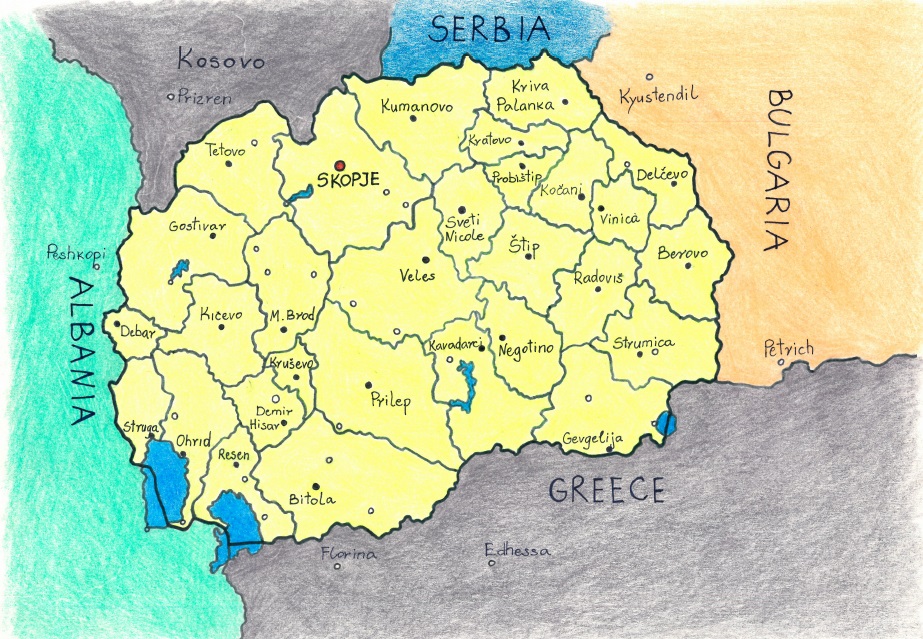
Viele Menschen stellen sich die Frage: Welche Sprache spricht man in Mazedonien? Die offizielle und am weitesten verbreitete Sprache ist Mazedonisch. Sie wird von der Mehrheit der Bevölkerung als Muttersprache gesprochen und dient als Amtssprache in Verwaltung, Politik, Bildung und Medien. Im alltäglichen Leben ist Mazedonisch allgegenwärtig und verbindet Menschen unterschiedlicher Generationen.
Neben der mazedonischen Sprache existieren jedoch weitere Sprachen, die von ethnischen Minderheiten gesprochen werden. Besonders Albanisch nimmt eine bedeutende Stellung ein und wird in bestimmten Regionen auch offiziell verwendet. Diese sprachliche Vielfalt ist ein charakteristisches Merkmal Mazedoniens und zeigt die multikulturelle Struktur des Landes.
Mazedonische Sprache: Herkunft und Besonderheiten
Die Mazedonische Sprache gehört zur südslawischen Sprachfamilie und ist eng mit dem Bulgarischen und Serbischen verwandt. Trotz dieser Nähe besitzt sie eine eigenständige grammatikalische Struktur und einen eigenen Wortschatz. Geschrieben wird Mazedonisch mit dem kyrillischen Alphabet, das speziell an die Lautstruktur der Sprache angepasst wurde.
Ein besonderes Merkmal der mazedonischen Sprache ist ihre vergleichsweise einfache Grammatik im Vergleich zu anderen slawischen Sprachen. Bestimmte Artikel werden direkt an das Substantiv angehängt, was sie von vielen europäischen Sprachen unterscheidet. Diese sprachlichen Eigenschaften machen Mazedonisch sowohl einzigartig als auch interessant für Sprachwissenschaftler.
Sprache in Mazedonien: Alltag und Mehrsprachigkeit
Die Sprache in Mazedonien ist stark von Mehrsprachigkeit geprägt. Aufgrund der ethnischen Vielfalt des Landes werden im Alltag häufig mehrere Sprachen parallel verwendet. In vielen Städten ist es üblich, dass Menschen Mazedonisch und Albanisch oder andere Sprachen fließend sprechen.
Die mazedonische Verfassung erkennt die sprachlichen Rechte von Minderheiten an, was zu einem offenen und inklusiven Sprachsystem geführt hat. In Schulen, öffentlichen Institutionen und sogar im politischen Diskurs ist Mehrsprachigkeit fest verankert. Diese Praxis trägt dazu bei, den sozialen Zusammenhalt zu stärken und kulturelle Unterschiede zu respektieren.
Sprachentwicklung im Balkanraum: Historische Einflüsse
Die Sprachentwicklung im Balkanraum ist das Ergebnis jahrhundertelanger historischer Prozesse. Der Balkan war stets ein Schnittpunkt verschiedener Kulturen, Völker und Reiche. Diese kontinuierlichen Begegnungen führten dazu, dass sich Sprachen gegenseitig beeinflussten und gemeinsame Strukturen entwickelten.
Auch die mazedonische Sprache wurde durch diese Entwicklungen geprägt. Sie enthält zahlreiche Lehnwörter aus dem Türkischen, Griechischen und Albanischen. Gleichzeitig teilt sie grammatikalische Merkmale mit anderen Balkan-Sprachen, obwohl diese unterschiedlichen Sprachfamilien angehören. Dieses Phänomen macht Welche Sprache spricht man in Mazedonien den Balkan sprachwissenschaftlich besonders interessant.
Historische Entwicklung der mazedonischen Sprache
Die mazedonische Sprache wurde erst Mitte des 20. Jahrhunderts offiziell als eigenständige Sprache anerkannt. Im Jahr 1945 begann die Standardisierung, bei der eine einheitliche Grammatik und Rechtschreibung festgelegt wurden. Dieser Prozess war entscheidend für die Entwicklung einer modernen Literatursprache.
Seitdem hat sich Mazedonisch stetig weiterentwickelt und ist heute in Literatur, Journalismus, Film und digitalen Medien präsent. Die Sprache wurde zu einem wichtigen Symbol nationaler Identität und kultureller Selbstbestimmung.